
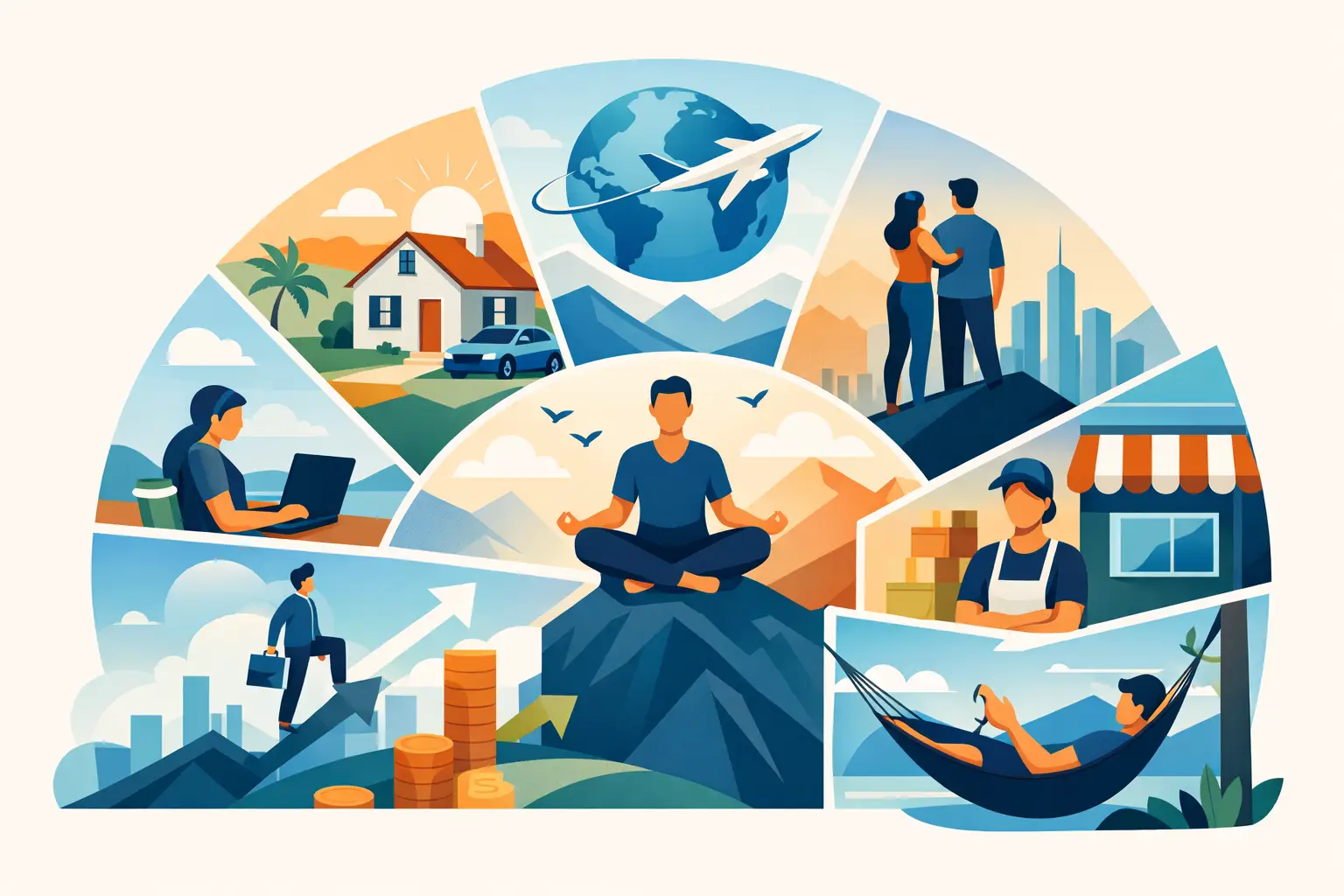
A promotion used to be the clearest signal that someone was moving closer to the American Dream. Now, a person might build that progress by learning an AI tool after work, launching a specialized service, or turning years of hard-earned experience into a digital business. These modern American Dream examples reflect a larger shift: success is less about following one prescribed ladder and more about creating options, ownership, and freedom.
The dream has not disappeared. It is being rebuilt around adaptability. A secure future still requires work, discipline, and character, but it also requires the willingness to learn how technology can increase the value of what you already know.
What the Modern American Dream Looks Like
For generations, the American Dream was commonly pictured as a stable job, a home, a family, and the chance to do better than the generation before you. Those goals still matter. But economic mobility now also depends on how quickly a person can build relevant skills, make smart use of technology, and develop income that is not tied to a single employer.
That does not mean everyone needs to become a programmer, influencer, or venture-backed founder. It means every ambitious person should think like an owner. Owners look for problems to solve, improve their capabilities, protect their reputation, and create value that can travel with them from one opportunity to the next.
AI is a major part of this change. Used well, it can help a small business compete with a larger one, help a professional produce better work in less time, and help a career changer learn faster. The advantage does not belong only to technical experts. It belongs to people who pair practical technology with judgment, communication, and a clear purpose.
7 Modern American Dream Examples in Action
1. The employee who becomes AI-capable
Consider a project coordinator, operations manager, marketer, or customer service professional who learns to use AI responsibly to research, organize ideas, draft first versions, analyze information, and automate repetitive work. They are not replacing their own thinking. They are expanding their capacity.
This person becomes more valuable because they can focus on decisions, relationships, and results rather than spending every hour on routine tasks. Over time, that capability can lead to a better role, a stronger negotiating position, or the confidence to pursue work that once felt out of reach. Career resilience is no longer only about working harder. It is about learning how to work with leverage.
2. The skilled worker who builds a specialized business
A plumber, contractor, photographer, fitness coach, accountant, or home organizer may have years of valuable knowledge but little time for marketing, administration, and follow-up. AI tools can help that person write customer communications, create service descriptions, organize common questions, and develop a more professional online presence.
The real asset is still the person’s expertise and reliability. Technology simply helps them present that value more clearly and serve more customers without losing the personal touch. This is an American Dream built on craftsmanship, reputation, and ownership - not on chasing every new trend.
3. The career changer who turns experience into a new path
Many people reach a point where their industry has changed, their job no longer offers growth, or their work no longer matches their goals. Starting over can feel intimidating, especially in mid-career. Yet prior experience is often more transferable than people realize.
A former teacher may move into training and instructional design. A retail manager may enter operations or customer success. A military veteran may build a career in logistics, cybersecurity, or project management. AI can accelerate the transition by helping people identify transferable skills, practice communication, study unfamiliar concepts, and prepare for interviews. The key is not pretending to be an expert overnight. It is building a bridge from proven experience to a growing opportunity.
4. The side project that becomes an asset
Not every side project should become a full-time company. That is one of the most useful truths in entrepreneurship. A side income stream can begin as a practical way to test an idea, build confidence, and create financial breathing room.
A professional might create a niche newsletter, offer consulting in an area they know well, sell a digital resource, or provide a local service on weekends. AI can reduce the friction of getting started by helping with planning, early content, customer research, and routine tasks. But the strongest side projects solve a real problem for real people. They are built on consistency, not hype.
Even if the project never replaces a salary, it can create something powerful: proof that you can generate value independently. That confidence changes how you approach your primary career, your finances, and your future.
5. The small business owner who competes smarter
Small businesses have always carried the spirit of American enterprise. What has changed is their ability to access capabilities that once required a large staff or agency budget. A local retailer can better understand customer questions. A restaurant can improve promotional messaging. A service company can create clearer estimates, training materials, and follow-up systems.
The trade-off is that speed alone is not a strategy. If every business uses generic AI-generated messaging, customers will notice. The businesses that win will combine technology with local knowledge, a genuine point of view, and dependable service. AI should make a business more human in the moments that matter - more responsive, more prepared, and more available to customers.
6. The family that builds financial margin
The modern American Dream is not only a story about earnings. It is also a story about control. A family that pays down high-interest debt, develops marketable skills, creates an emergency fund, and makes informed long-term decisions is building freedom even if the progress is gradual.
Technology can support this effort by making information, education, and planning more accessible. But no tool can substitute for steady habits. Financial progress often looks unglamorous from the outside: learning before spending, delaying a purchase, pursuing a certification, or using an extra income stream to reduce debt instead of increasing lifestyle costs.
That is not a lesser version of success. It is the foundation that gives people the power to say yes to opportunity and no to desperation.
7. The community-minded founder who creates jobs
One of the most meaningful forms of success is building an enterprise that gives others a chance to grow. This could be a local business owner hiring their first employee, a consultant creating work for contractors, or a founder building a company around a useful problem.
The goal is not simply personal wealth. It is contribution. When a business trains people, treats them fairly, and helps them build skills, it extends opportunity beyond one individual. AI can help small teams operate more efficiently, but leadership remains a human responsibility. A better future of work needs people who use technology to raise standards, not merely cut costs.
The Thread Connecting These Examples
Each of these modern American Dream examples begins with agency. The employee takes responsibility for learning. The business owner looks for a better way to serve. The career changer treats experience as a starting point rather than a limitation. The family creates margin. The founder creates opportunity for others.
There is no single route because people begin from different places. Someone supporting children, caring for parents, recovering from a job loss, or paying off debt will make decisions differently than someone with more time or capital. The right path depends on your responsibilities, strengths, and risk tolerance.
Still, the direction is clear. The people most likely to thrive will not wait for perfect certainty. They will build skills that complement AI, develop a reputation for solving problems, and seek forms of ownership in their work and lives. They will understand that technology is not a replacement for ambition. It is a tool that can give ambition greater reach.
Your American Dream does not need to look like anyone else’s. It needs to give you more capability, more choice, and a stronger ability to create a future you are proud to pass forward.
